
What makes someone a leader?
If you’re anything like me, you’ve probably read your fair share of leadership books—and every one of them seems to offer a different definition. Some focus on charisma, others on strategy, and still others on titles. But strip away the buzzwords, and you’re left asking a deeper question: What really defines a leader?
There’s an old saying, “All leaders are managers, but not all managers are leaders.” But let’s unpack that.
“All leaders are managers” — that’s simply not true. Leadership isn’t reserved for those with a title or an office. Think of someone organizing a volunteer event. Do they have to be a manager to lead the team? Absolutely not. Leadership can emerge from anyone who inspires action and direction.
“Not all managers are leaders” — now that hits closer to the truth. A title alone doesn’t make someone influential. Real leadership is more than giving orders or hitting KPIs. It’s about impact, trust, and vision.
According to Roberts (2020), leadership is fundamentally about influence and impact. And that starts long before you’re responsible for anyone else—it begins with how well you lead yourself.
Leadership Starts with the Self
Before you can effectively lead others, you have to ask: “Who am I?”
This isn’t just a philosophical question—it’s foundational. The answer shapes how you show up for others, and what kind of impact you have. It’s your internal compass.
Let me introduce what I call the Pillars of Self:
• Self-Concept: How you see yourself—your identity and sense of worth.
• Principles: Your non-negotiables. These are the fundamental truths you live by.
• Attitudes: Your mindset and emotional posture toward people and challenges.
• Values: What matters most to you, the things you prioritize and protect.
• Life Experiences: The unique journey you’ve walked that shaped your story.
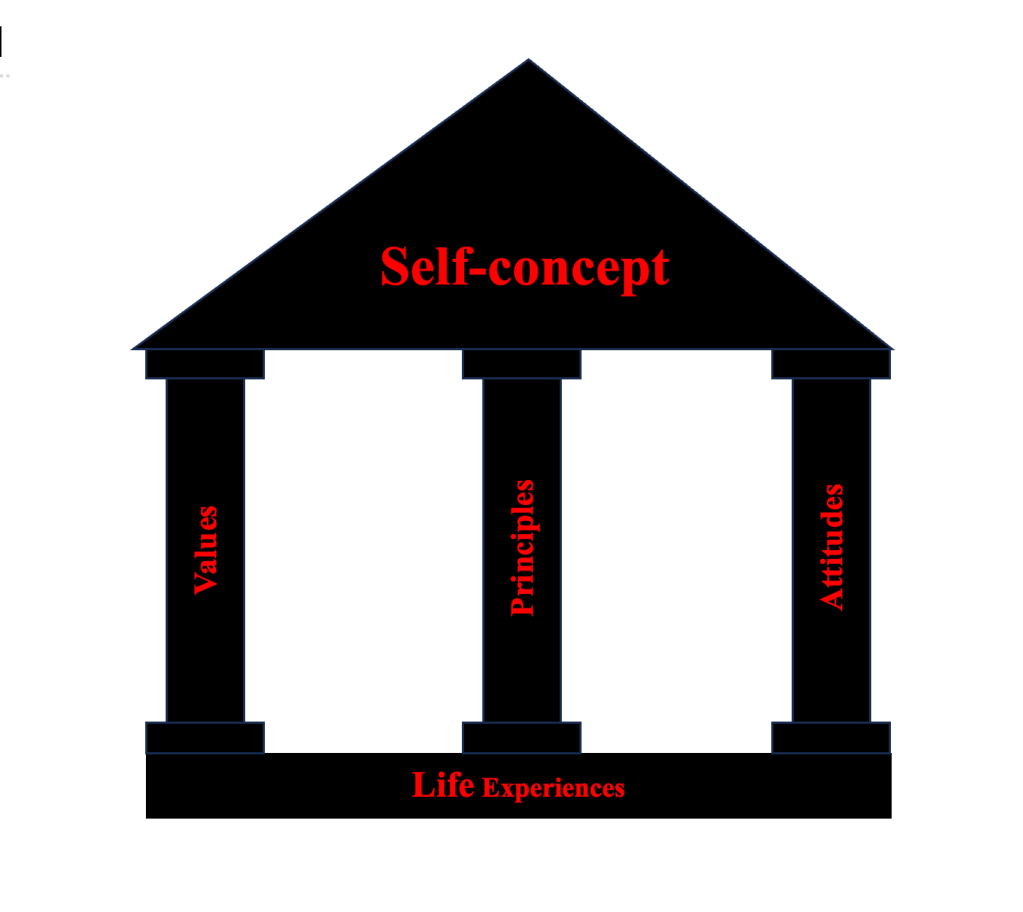
Each of these elements plays a critical role in how you lead. When you’re grounded in them, you become consistent, authentic, and confident. You’re no longer easily swayed by pressure or conflict because you lead from a place of clarity.
Harvard Business Review touched on this in an article titled “Who Are You as a Leader?”. They emphasized how vital self-concept is in shaping your professional and personal life. It acts as a pillar—a load-bearing structure that supports everything you do.
From Self to Leadership
Once you’ve clarified who you are, you can then ask the next powerful question:
“What kind of leader do I want to be?”
Funny enough, someone once asked me that, and I didn’t have a clear answer—even after two years of being a manager. It was humbling. My colleague gently said, “You can’t know the kind of leader you want to be until you know who you are.” That stuck with me.
That’s the heart of it. Leadership is not a fixed identity. It’s shaped by self-awareness, growth, and the willingness to reflect. Your Pillars of Self are the foundation for every leadership decision you’ll make.
Leadership Is Contagious
One of my first supervisors once told me, “Tell me who your boss is, and I’ll tell you what kind of employee you are.”
It took me a decade to fully appreciate the truth in that.
Leaders influence more than just outcomes—they shape culture, attitudes, and even identity. Who you are as a leader doesn’t just affect your own performance—it ripples through your team, often showing up in their behavior long after you’re gone.
Leadership isn’t about titles.
It’s about who you are—and how who you are shapes what others become.
 Elevate Your Leadership Game
Leave a comment